What makes regenerative practices verifiable
Regenerative agriculture has moved quickly from niche concept to mainstream commitment. Companies now report on cover cropping, crop rotation, reduced...

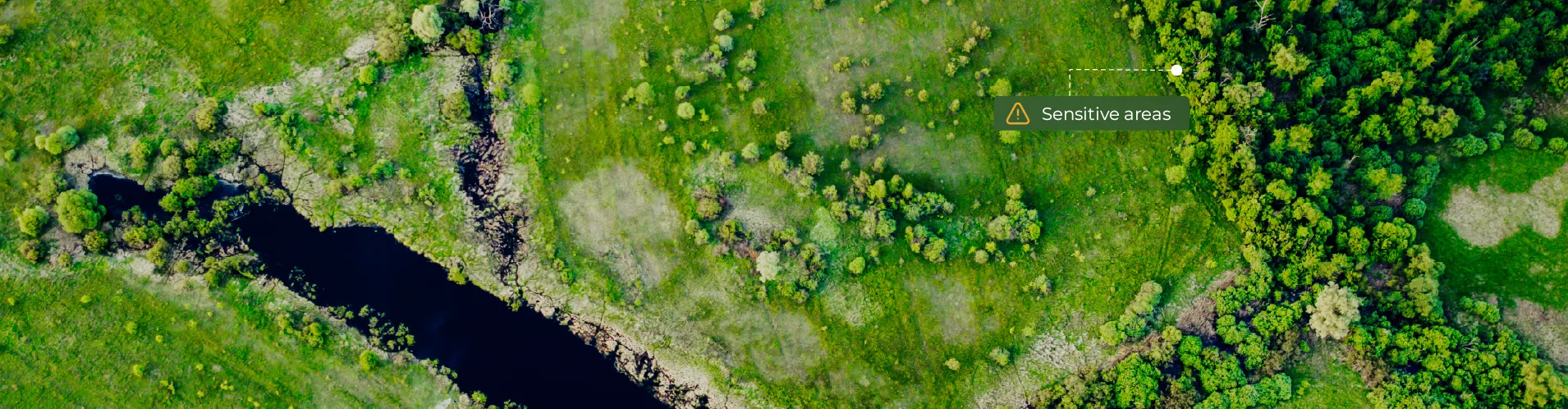
For many organizations, biodiversity has long sat alongside climate as an important but difficult topic. Companies have made commitments, published policies, and acknowledged the need to reduce impacts on ecosystems. But expectations are changing. Increasingly, stakeholders are asking not just what companies intend to do, but how they know whether those actions are working.
This shift reflects a broader trend across sustainability. As regulatory frameworks evolve and voluntary initiatives mature, biodiversity must be understood spatially and operationally, not merely described at a high level. Whether it is meeting disclosure requirements, conducting supply chain due diligence, or managing internal risks, organizations are being asked to demonstrate a clearer understanding of how their activities interact with sensitive ecosystems and species.
At the same time, biodiversity presents unique challenges. Unlike carbon, it cannot be reduced to a single metric or tracked through a universal accounting framework. Impacts are highly local, shaped by ecological conditions, land use history, and governance. What matters in one landscape may be very different in another.
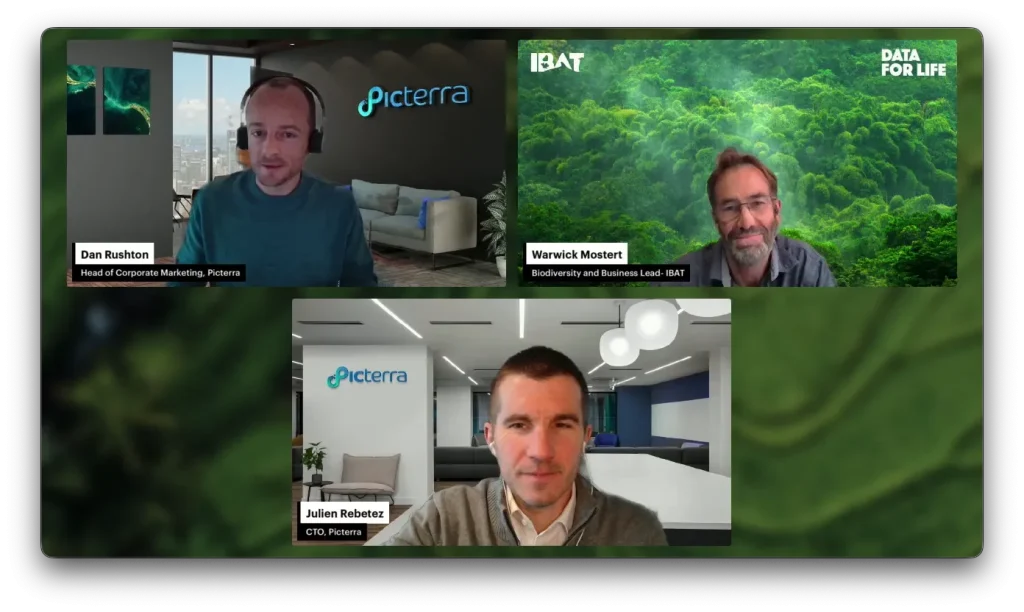
In this context, turning biodiversity commitments into credible action starts with a simple question: how do you move from general awareness to evidence-based decisions? That question formed the basis of our recent discussion with the Integrated Biodiversity Assessment Tool (IBAT), where we explored how trusted data and geospatial analysis can help organizations better understand and manage biodiversity in practice.
A recurring theme throughout the discussion was the importance of starting with trusted, globally recognized biodiversity data. Before organizations can assess risk, report impacts, or make sourcing decisions, they need a consistent understanding of the ecological context in which they operate.
This is where IBAT plays a critical role. By bringing together datasets such as the World Database on Protected Areas (WDPA), Key Biodiversity Areas, and the IUCN Red List, IBAT provides a shared reference point that is widely used by companies, financial institutions, and policymakers. These datasets do not prescribe decisions, but they establish a common baseline for understanding where biodiversity values are concentrated and where sensitivities may exist.
Warwick Mostert, Biodiversity & Business Lead at IBAT, emphasized that biodiversity data is most powerful when used to inform context rather than to deliver simplistic answers.

Starting from this foundation helps organizations move beyond assumptions and toward more transparent assessments. It also provides a foundation for alignment across teams and stakeholders, ensuring that discussions on biodiversity risks and opportunities are grounded in consistent, authoritative information rather than fragmented datasets or ad hoc interpretations.
As Warwick noted, having a shared baseline is essential if companies are to make credible claims and demonstrate progress over time.
Protected areas are often the first lens through which organizations begin to assess biodiversity risk. Global datasets such as the World Database on Protected Areas provide a critical starting point for understanding where conservation priorities, legal frameworks, and ecological sensitivities intersect with operational footprints and supply chains.
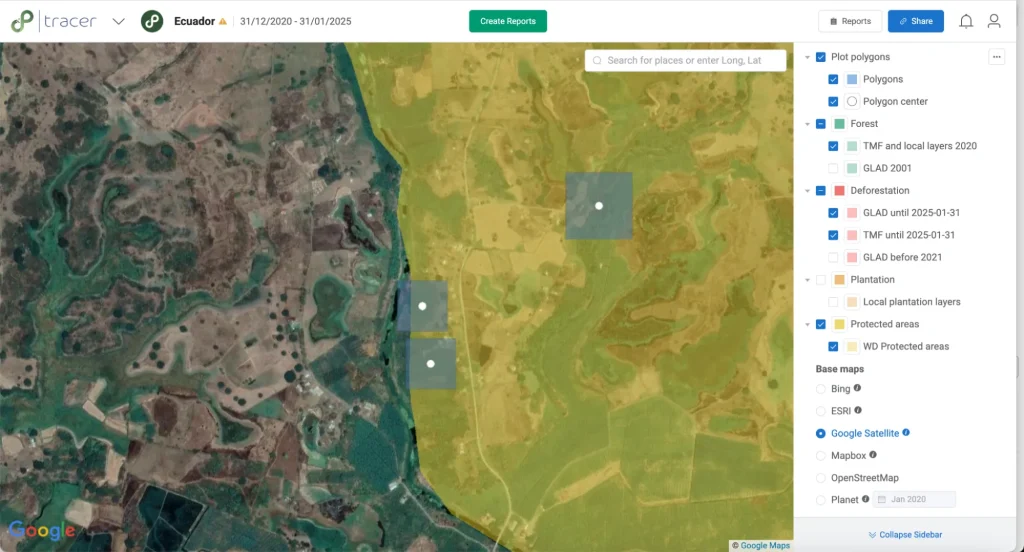
However, as discussed during the session, simply identifying whether an asset or sourcing location overlaps a protected area is rarely sufficient. Protected areas vary widely in their purpose, governance, and permitted activities. Some are designated for strict conservation with minimal human intervention, while others permit sustainable use that supports local livelihoods and landscape stewardship.
Warwick highlighted that interpreting these areas requires nuance and an appreciation of context.
This distinction is increasingly important as companies work to meet regulatory requirements and voluntary commitments. Treating all overlaps as equivalent can lead to oversimplified conclusions, unnecessary exclusions, or missed opportunities to support sustainable practices in complex landscapes.
Instead, organizations are moving toward approaches that combine global datasets with deeper analysis, enabling them to understand not just where protected areas are located, but how activities within and around them relate to conservation objectives. This shift reflects a broader recognition that biodiversity risk assessment is as much about interpretation as it is about data.
While global biodiversity datasets provide essential context, a key question for many organizations is how to apply that information consistently across large portfolios, supply chains, or landscapes. Static maps alone cannot answer questions about what is happening on the ground today, or how conditions are changing over time.
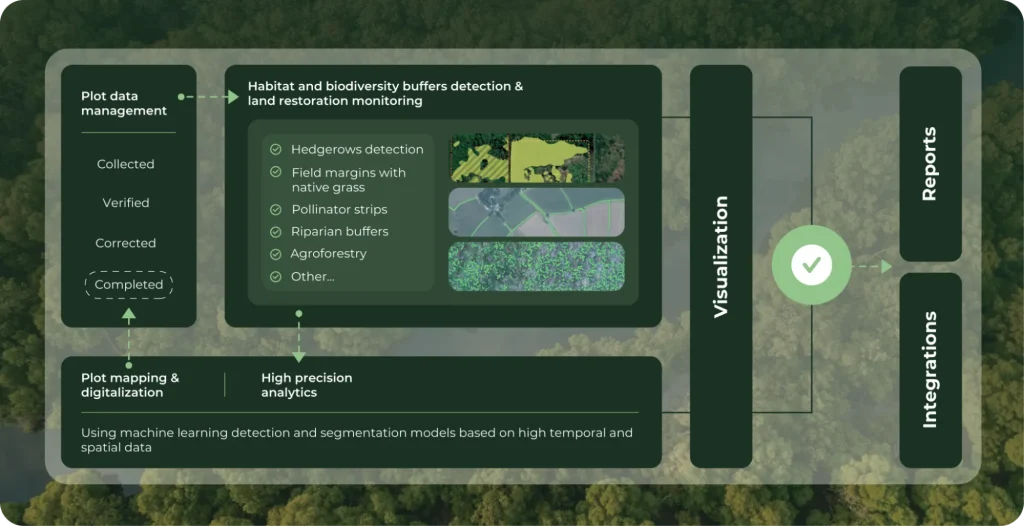
This is where geospatial analysis and automation become critical. By integrating IBAT datasets with satellite imagery and machine learning, organizations can move from one-off assessments to repeatable workflows that support ongoing monitoring and decision-making. Instead of manually reviewing individual sites, teams can apply the same logic across thousands of locations and update insights as new data becomes available.
Julien Rebetez, CTO at Picterra, explained that the real value lies in turning biodiversity context into something operational.

In practice, this means using reference layers such as protected areas or Key Biodiversity Areas to flag potential sensitivities, then combining them with time-series satellite observations to detect land-use change, disturbance, or recovery. The result is a more dynamic understanding of biodiversity risk that supports both compliance requirements and broader sustainability goals.
As Julien noted during the discussion, operationalizing biodiversity is ultimately about building systems that allow organizations to monitor, interpret, and act with greater confidence.
Moving from data to action requires a clear understanding of what meaningful biodiversity management actually looks like on the ground. Throughout the discussion, one point consistently emerged: credible action begins with understanding the baseline. Without a clear view of ecological conditions and sensitivities, it is difficult to prioritize interventions or evaluate whether outcomes are improving.
Organizations are increasingly recognizing that not all locations carry the same level of biodiversity importance. Some areas may require strict avoidance due to the presence of threatened species or critical habitats, while others may offer opportunities to support restoration or more sustainable land-use practices. This spatial perspective helps companies allocate resources more effectively and focus efforts where they can have the greatest impact.
Warwick emphasized that becoming nature-positive is less about achieving a single target and more about making informed, context-aware decisions.
Another important takeaway is that biodiversity management is inherently iterative. Conditions change, new information emerges, and strategies need to adapt accordingly. By combining trusted datasets with ongoing monitoring, organizations can build a feedback loop that supports continuous improvement rather than static reporting.
Ultimately, credible biodiversity action is grounded in transparency, context, and a willingness to engage with complexity rather than simplify it away.
As expectations around biodiversity continue to evolve, organizations are moving beyond periodic assessments toward more continuous approaches to understanding and managing their impacts. The discussion highlighted a clear trajectory: from static screening exercises toward systems that integrate trusted data, ongoing monitoring, and cross-functional decision-making.
This shift reflects the growing recognition that biodiversity is not a one-time compliance check. It requires sustained attention, cross-team collaboration, and the ability to interpret signals as conditions change. Advances in satellite observation, data integration, and analytical tools are making it increasingly feasible to track environmental change at scale, providing organizations with a more timely and nuanced view of risk and opportunity.
Julien noted that interoperability between datasets, platforms, and standards will be essential as biodiversity reporting matures.
Partnerships between data providers such as IBAT and technology platforms are critical to enabling this transition. Initiatives like the Picterra Insights Hub reflect this direction by bringing together biodiversity context, supply chain intelligence, and monitoring capabilities in a single environment, helping teams move from fragmented analyses toward more integrated decision-making.
As the conversation made clear, turning biodiversity data into decisions is not about simplifying complexity. It is about building the tools and processes that allow organizations to navigate that complexity with greater clarity and confidence.
Regenerative agriculture has moved quickly from niche concept to mainstream commitment. Companies now report on cover cropping, crop rotation, reduced...
Compliance expectations across agricultural and forest risk supply chains have shifted quickly. Regulations and voluntary frameworks now require specific, defensible...

Across agriculture, energy, and industrial operations, tanks are critical assets because they sit at the intersection of regulation, environmental impact,...

The unseen contamination risk in leafy greens Leafy greens sit at the frontline of food safety. Because they are harvested...